
Safety Ratings
How Lab Belay uses NFPA 704 and GHS classifications to automatically characterize chemical hazards.
Lab Belay automatically applies two international safety classification systems to every chemical in your inventory: NFPA 704 and the Globally Harmonized System (GHS). Understanding these systems helps you interpret the safety data displayed throughout the platform.
NFPA 704
The NFPA 704 standard — "Standard System for the Identification of the Hazards of Materials for Emergency Response" — defines a four-quadrant diamond-shaped label for hazardous materials. Each quadrant uses a 0–4 scale:
| Quadrant | Color | Hazard type | Scale meaning |
|---|---|---|---|
| Top | Red | Flammability | 0 = will not burn; 4 = burns below 73°F |
| Left | Blue | Health | 0 = safe; 4 = can cause death |
| Right | Yellow | Instability / Reactivity | 0 = stable; 4 = may detonate |
| Bottom | White | Special hazard | Letters or symbols (W = water-reactive, OX = oxidizer) |
How Lab Belay assigns ratings
NFPA ratings for chemicals in the global catalog come from SDS data and are validated against published regulatory sources. When you search for a chemical and add it to your inventory, these ratings carry over automatically.
For chemicals not found in the global catalog, you can upload an SDS sheet and Beaker AI will extract the NFPA values automatically.
Lab-level aggregation
For every lab and bench, Lab Belay calculates an aggregate NFPA rating based on the chemicals present:
- The highest health rating among all chemicals becomes the lab's health rating
- The highest flammability rating becomes the lab's fire rating
- The highest reactivity rating becomes the lab's reactivity rating
- Any special hazard flags (W, OX, etc.) present on any chemical are included in the lab's special hazard display
This gives you an instant worst-case hazard picture for any space without manually tracking it yourself.
GHS (Globally Harmonized System)
GHS is a United Nations framework for classifying and communicating chemical hazards. Lab Belay displays the standard GHS pictogram images and hazard statements for each chemical:
| Pictogram | Code | Meaning |
|---|---|---|
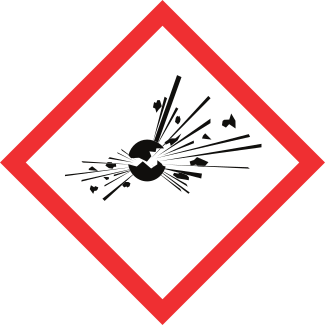 | GHS01 | Explosives, self-reactives, organic peroxides |
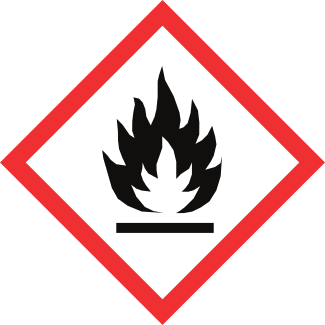 | GHS02 | Flammables, pyrophorics, self-heating substances |
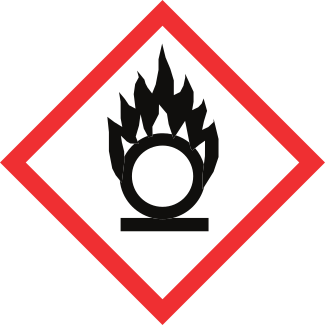 | GHS03 | Oxidizers |
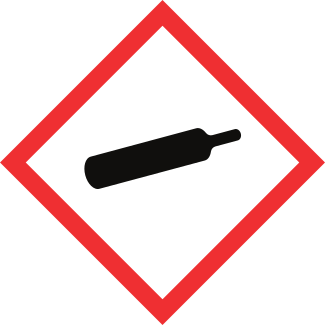 | GHS04 | Gases under pressure |
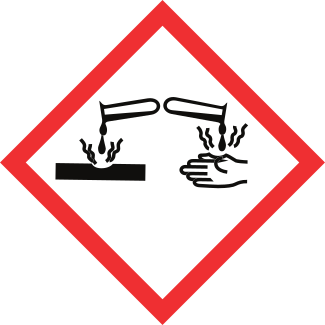 | GHS05 | Corrosives |
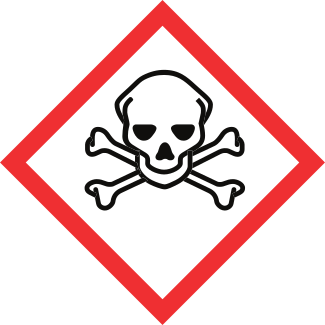 | GHS06 | Acute toxicity (severe) |
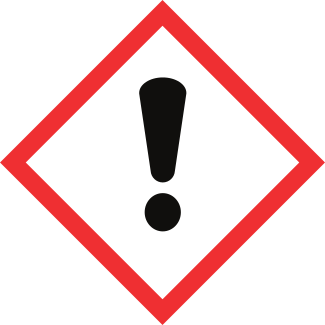 | GHS07 | Irritants, harmful substances, narcotic effects |
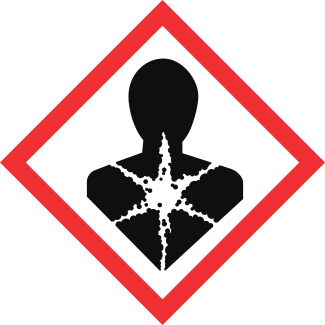 | GHS08 | Carcinogens, reproductive toxicity, respiratory sensitizers |
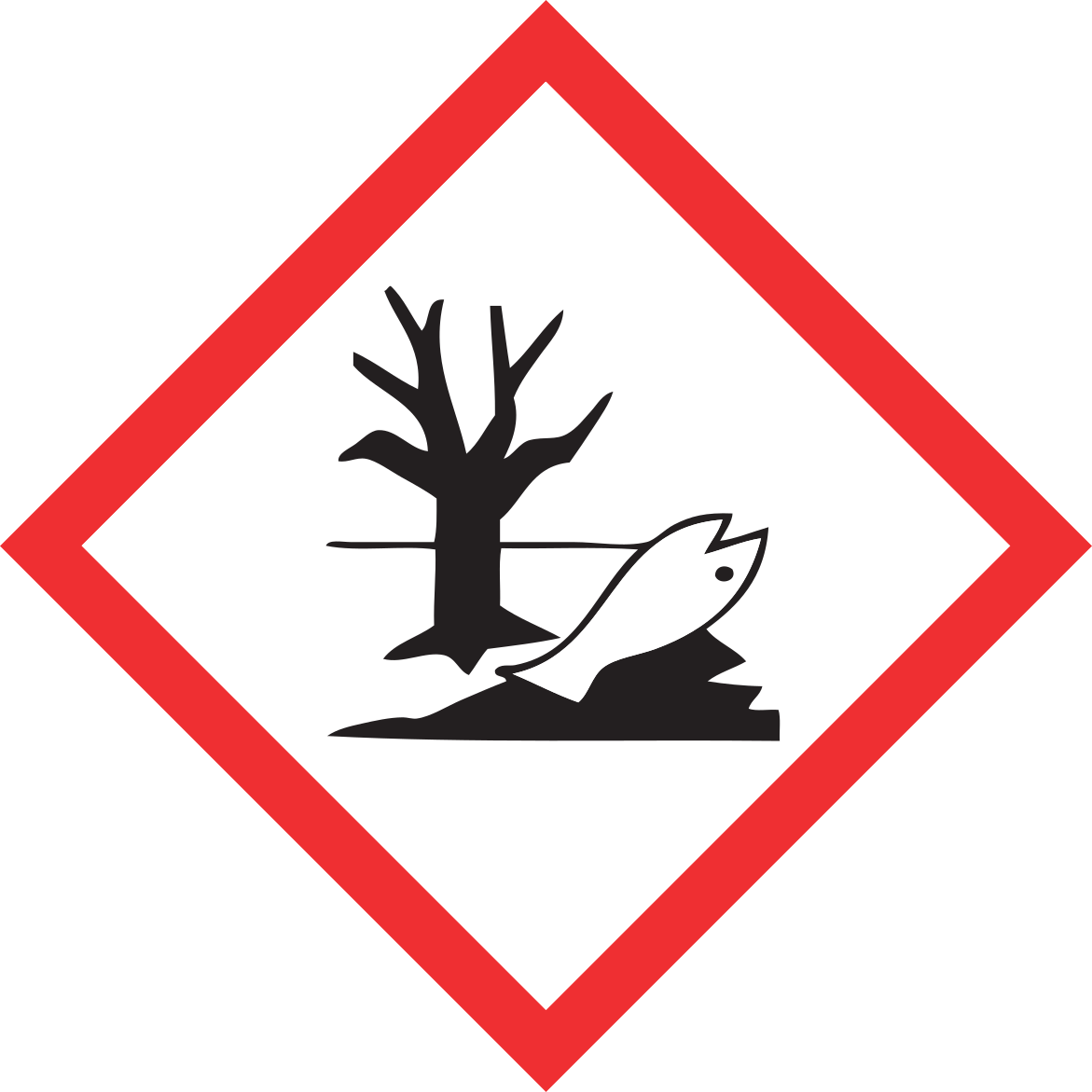 | GHS09 | Aquatic toxicity |
GHS hazard statements (e.g., H225 — Highly flammable liquid and vapour) are displayed on each chemical's detail page and included in PDF safety reports.
Beaker AI
Beaker can answer questions about chemical safety data and identify high-hazard materials in your inventory:
"What's the NFPA fire rating for ethanol?"
"Find all chemicals in Lab 3 with a flammability rating of 3 or higher."
"Which chemicals in our inventory are water-reactive?"
Where to see safety data
- Chemical detail page — full NFPA diamond and GHS information
- Lab page — aggregate NFPA values for the lab
- Bench card — aggregate NFPA values for the bench
- PDF safety report — generated from any lab's detail page, includes all chemicals and their ratings